
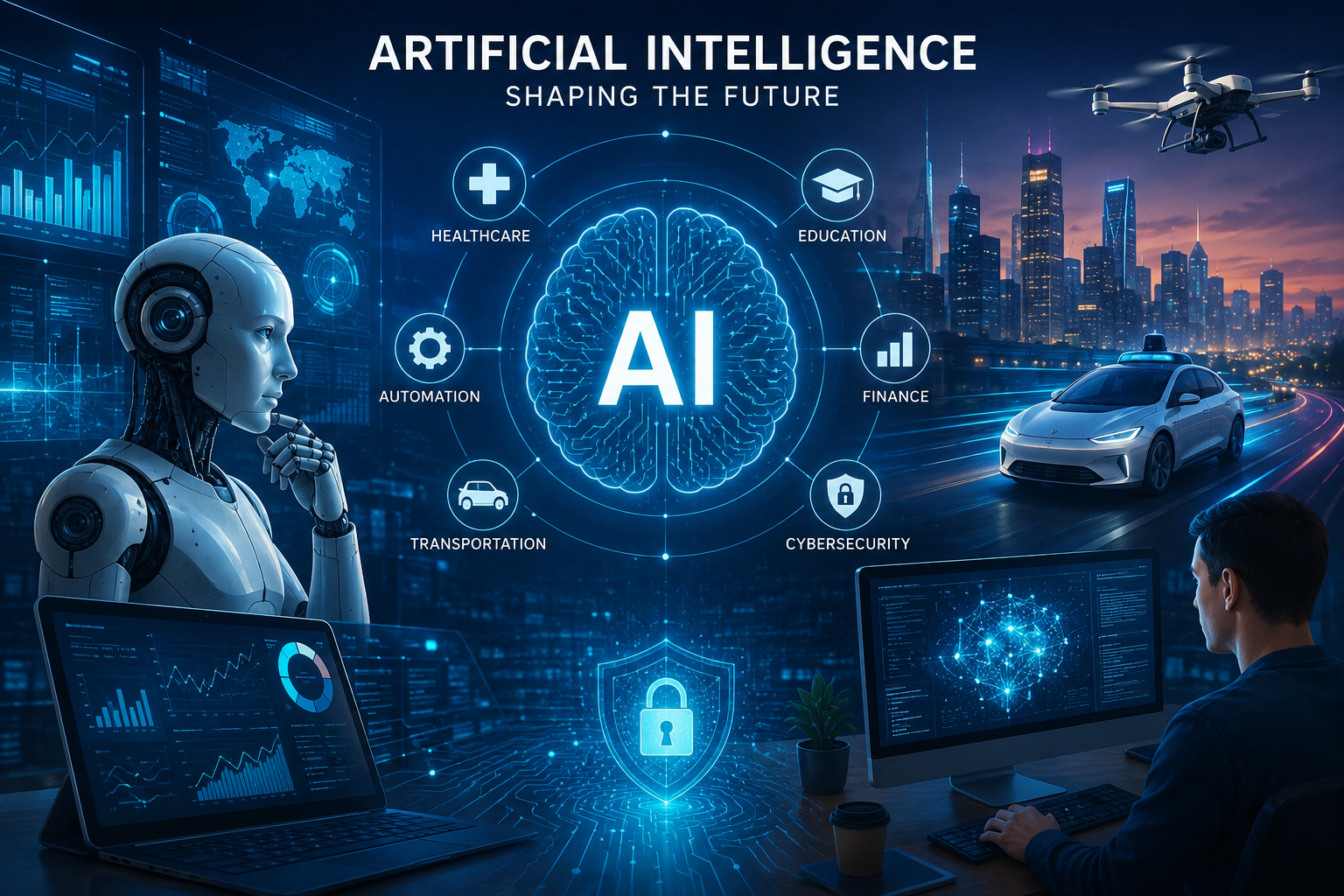
Artificial Intelligence (AI) continues to be one of the most transformative technologies of the decade. In 2026, AI is no longer limited to research labs or large technology companies. It has become an essential part of everyday life, powering everything from smart assistants and healthcare systems to education, finance, and creative industries.
What Is Artificial Intelligence?
Artificial Intelligence refers to computer systems that can perform tasks that typically require human intelligence. These tasks include understanding natural language, recognizing images, analyzing data, solving problems, and making informed decisions. Recent advances in machine learning and generative AI have significantly expanded the capabilities of these systems.
Key AI Trends in 2026
1. Smarter AI Assistants
Modern AI assistants are more capable than ever. They can manage schedules, summarize documents, answer complex questions, and automate repetitive tasks, helping both individuals and businesses save time and improve productivity.
2. AI-Powered Content Creation
Generative AI tools are transforming the way content is created. Writers, designers, developers, and marketers now use AI to generate articles, images, videos, and software code, allowing teams to work faster while maintaining high-quality results.
3. Stronger Cybersecurity
As cyber threats become more sophisticated, AI is playing a critical role in digital security. Intelligent security systems can detect unusual activity, identify vulnerabilities, and respond to attacks in real time, helping organizations protect their data.
4. Innovation in Healthcare
Healthcare providers are using AI to analyze medical images, support disease diagnosis, accelerate drug discovery, and personalize treatment plans. These advancements have the potential to improve patient outcomes while reducing healthcare costs.
Benefits of AI
Artificial Intelligence offers several advantages, including:
- Increased productivity and efficiency.
- Faster data analysis and decision-making.
- Improved customer experiences.
- Automation of repetitive tasks.
- New opportunities for innovation across industries.
Challenges and Ethical Concerns
Despite its benefits, AI also raises important questions. Privacy, data security, misinformation, algorithmic bias, and the impact of automation on employment remain major concerns. Governments, businesses, and technology leaders continue to work on regulations and ethical guidelines to ensure AI is developed and used responsibly.
The Future of AI
Experts believe AI will become even more integrated into daily life over the next few years. Future AI systems are expected to be more accurate, efficient, and collaborative, helping people solve complex problems while supporting creativity and innovation rather than replacing human expertise.
Conclusion
Artificial Intelligence is reshaping the future of technology and society. As AI continues to evolve, it will create exciting opportunities for businesses, developers, and consumers alike. The key to unlocking its full potential lies in responsible innovation, ethical development, and continuous learning to adapt to this rapidly changing technological landscape.
Leave a Reply